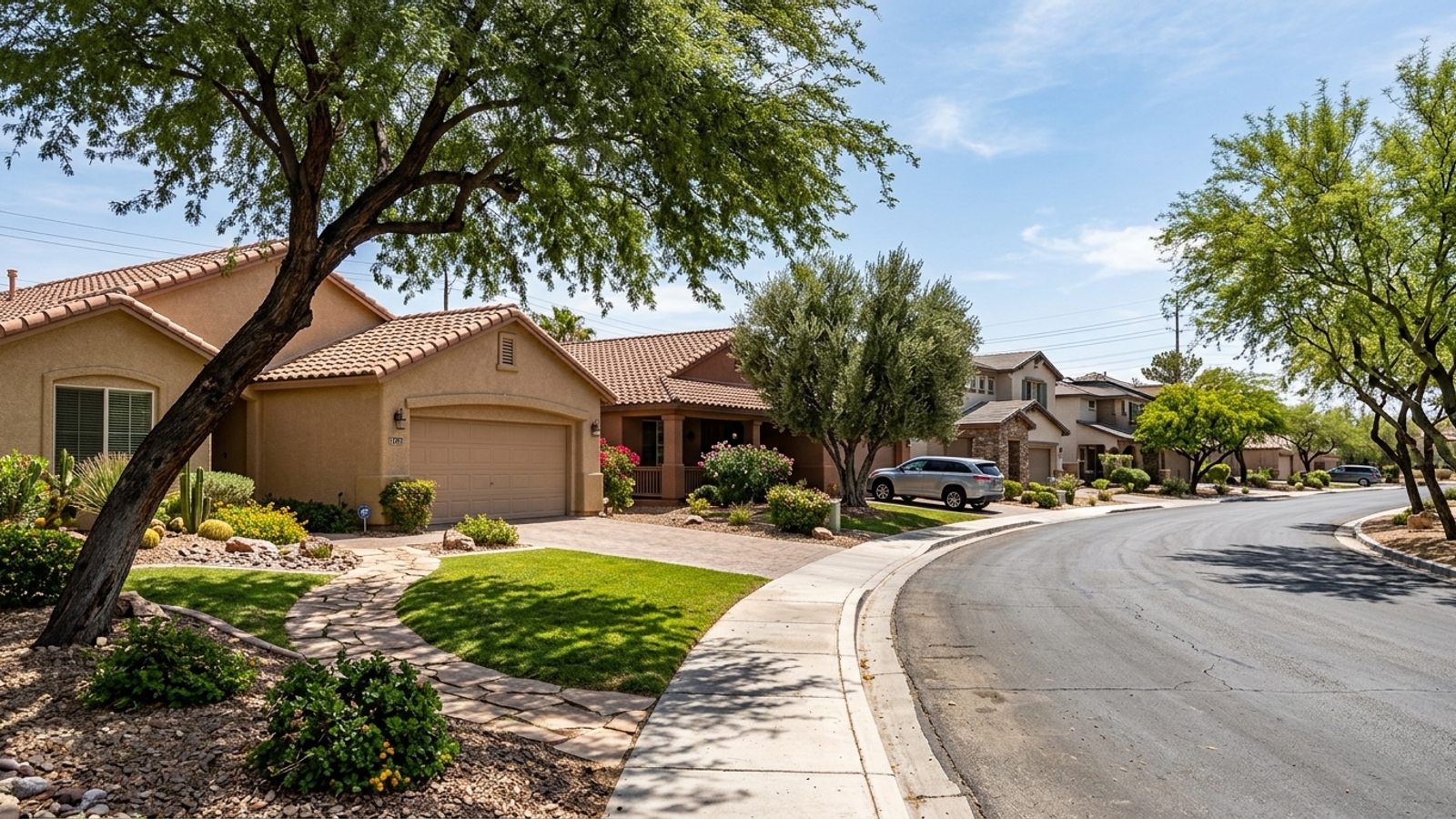
The median sale price for a home in Las Vegas, NV sits right around $470,000 as of mid-2026. If you recently inherited a property in the area, that's potentially a significant windfall - but it also raises an immediate question about how inherited property is taxed when sold in Nevada.
The short answer is probably less than you fear. The tax rules around inherited real estate give you several legal ways to protect your proceeds. And because Nevada has no state income tax, you're only dealing with federal tax codes - not two layers of government coming at you at once. The IRS valuation rules for inherited assets let you make a clear-eyed decision about whether to sell, rent the place out, or move in yourself.
How Capital Gains Taxes Apply to Inherited Nevada Real Estate
Capital gains tax is the tax you pay on profit from selling an asset that went up in value. Buy a house for $200,000, sell it years later for $450,000, and that $250,000 difference is your capital gain. With inherited real estate, the IRS treats the property differently than something you bought yourself - you don't automatically owe taxes just for receiving the house.
Nevada's tax landscape makes this even simpler. The state imposes no capital gains tax and no individual income tax, so your state-level tax rate on any sale is $0. You're managing federal requirements only: long-term capital gains rates of 0%, 15%, or 20% depending on your overall income, plus a potential 3.8% Net Investment Income Tax if you're a higher earner.
Using the Step-Up in Basis to Minimize Tax Liability
The single most powerful tool available to you here is the step-up in basis rule. Your "basis" in a property is normally what you paid for it. If your parents bought a Las Vegas house in 1995 for $150,000, that was their basis - and selling that home today for $470,000 would normally mean a taxable gain of $320,000.
When you inherit the property, the IRS resets the basis to the home's fair market value on the day the original owner passed away. Decades of historical appreciation effectively disappear for tax purposes. If the house was worth $470,000 on the date of death, your new stepped-up basis is $470,000 - and selling it at that price means zero taxable profit.
Determining the Home's Fair Market Value
To use this rule, you need a defensible, documented valuation as of the date of death. The IRS won't accept a guess or an outdated property tax assessment - you need something you can point to if your return gets scrutinized.
That documentation matters even if you're planning to sell quickly. Homes in Las Vegas currently spend roughly 50 days on the market before selling, and prices can shift during that window. If you sell for $480,000 and your basis is $470,000, you'll owe federal capital gains tax on that $10,000 difference - but only that difference.
Why You Need a Professional Appraisal Early
A licensed local appraiser is your best option for locking in the date-of-death value. A standard single-family home appraisal in the Las Vegas area typically runs between $425 and $700. Inherited a luxury or custom property? Expect that fee to exceed $1,000 given the additional research involved.
Order the appraisal as soon as you can after the owner's passing. An appraiser can perform a retrospective valuation months or even years later, but the further out you are, the harder it becomes to reconstruct accurate historical data. Getting this done early locks in your stepped-up basis and gives you a clear price target when you're ready to list.
Common Strategies to Reduce Your Tax Burden
What you actually owe depends entirely on what you do with the property after inheriting it. Each path carries different tax implications, and the right choice depends on your financial situation and whether keeping the home in the family matters to you.
Here's how most heirs approach it.
Selling the Home Quickly
Selling immediately after inheriting is the most straightforward way to avoid capital gains taxes. Your basis resets to the date-of-death value, so a fast sale leaves almost no time for the home to appreciate above that number. Sell for the appraised value within a few months, and your taxable gain is zero.
Even if the home sells slightly above the appraised value, the tax exposure is usually minor. Closing costs and agent commissions can also be deducted from your proceeds, which helps offset any small gain that might have accumulated during a short holding period.
Moving In and Claiming It as Your Primary Residence
If you want to keep the house and live in it, you can eventually use the Section 121 exclusion to shelter future profits. Single homeowners can exclude up to $250,000 of capital gains from the sale of a primary residence; married couples filing jointly can exclude up to $500,000.
The requirement is straightforward: you must own and live in the home as your primary residence for at least two of the five years immediately preceding the sale. Your stepped-up basis stays intact, so this exclusion only applies to appreciation that occurs after the date of death - not the historical gains that were already wiped out.
Using a 1031 Exchange for Investment Properties
If you're thinking about renting the place out, a 1031 exchange gives you a way to defer future taxes. Once the Las Vegas home appreciates substantially over several rental years, selling it outright would trigger capital gains on that new growth. A 1031 exchange lets you roll those proceeds directly into a replacement investment property instead.
Follow the IRS timelines, use a qualified intermediary to handle the funds, and you can defer the capital gains taxes indefinitely. One hard limit: this only works for investment properties. If you're living in the home, you can't use a 1031 exchange.
Disclaiming the Real Estate
Not every inherited property is worth accepting. If the home has extensive deferred maintenance or carries a reverse mortgage, taking ownership can create more problems than it solves.
You have the legal right to disclaim the inheritance. A formal disclaimer means you refuse the asset entirely, and it passes to the next beneficiary in line under the will or state law. Because you never take ownership, you avoid the property taxes, maintenance costs, and any capital gains liability that would have come with it.
State Estate and Inheritance Taxes in Nevada
It's easy to conflate capital gains taxes with estate and inheritance taxes, but they're different things. Capital gains apply to profit from selling an asset. Estate and inheritance taxes apply to the total value of assets being transferred.
Nevada doesn't impose an inheritance tax, so you owe nothing at the state level on property you receive - though if the deceased owner lived in another state, that state's inheritance tax rules could still apply to you.
Nevada also has no state estate tax. The statute has been inoperative since 2005, and all Nevada estates are exempt from state-level taxation regardless of size. The only figure worth watching is the federal estate tax exemption, which sits at $15 million per individual for 2026 and doubles for married couples using portability.
How to Sell an Inherited Home in Clark County
Before you can list the home, you need the legal authority to sell it. If the property was held in a living trust or had a transfer-on-death deed, ownership passes to you directly without court involvement. Otherwise, the home has to go through probate.
Probate matters in Clark County are handled by the Probate Division of the Eighth Judicial District Court. Their portal lets you search case information and file the paperwork to be appointed as executor or administrator.
Once you have legal authority to sell, you'll decide whether to clear out the property and make repairs or list it as-is. With roughly 2,984 homes currently in local inventory, a renovated property tends to attract stronger offers. That said, many heirs - particularly those living out of state - prefer the simplicity of an as-is sale. Neither choice is wrong; it depends on your timeline and how much you want to take on.
Frequently Asked Questions About Inherited Property in Nevada
How do I use the step-up in basis to avoid capital gains on a Las Vegas home I just inherited?
You don't need to file special paperwork - the step-up in basis applies automatically under federal tax law. To use it effectively, hire an appraiser to document the home's value on the date of death, which typically costs $425 to $700 locally. When you sell, you'll only owe federal taxes on any profit above that appraised value. Nevada has a $0 state capital gains rate, so the federal calculation is all you're dealing with.
How long after probate do I have to sell an inherited Nevada property to avoid paying capital gains tax?
There's no legal deadline. That said, the longer you hold the property, the more likely it is to appreciate past its stepped-up basis. Selling within a few months of the owner's death is the most reliable way to keep the sale price close to the date-of-death value and walk away with zero capital gains.
Do I owe capital gains if the house is sold directly out of a Clark County probate estate instead of being transferred to me first?
It depends on the sale price. The estate itself receives the step-up in basis to the date-of-death value. If the executor sells the home through the Eighth Judicial District Court probate process for more than that appraised value, the estate owes federal capital gains tax on the difference before distributing the remaining funds to the heirs.
Will I owe capital gains if I rent out my inherited Las Vegas house for a few years before selling it?
Yes, most likely. Your basis stays locked at the date-of-death value, so any appreciation in the Las Vegas market during your rental period is taxable when you sell. A 1031 exchange can defer those taxes by rolling the proceeds into another investment property when you're ready to exit.
Can I avoid capital gains by moving into the Las Vegas house I inherited and claiming it as my primary residence?
Yes. Live in the home as your primary residence for at least two out of five years before selling, and you qualify for the Section 121 exclusion - up to $250,000 of profit excluded if you're single, or up to $500,000 for married couples filing jointly. That exclusion applies to appreciation above your stepped-up basis.
Does inheriting a property through a living trust change how capital gains taxes are calculated compared to going through Las Vegas probate?
No - the tax calculation is identical either way. Properties inherited through a living trust still receive a full step-up in basis to the date-of-death value. The trust just lets you skip the Clark County probate court, which makes the whole process faster and easier to manage.


