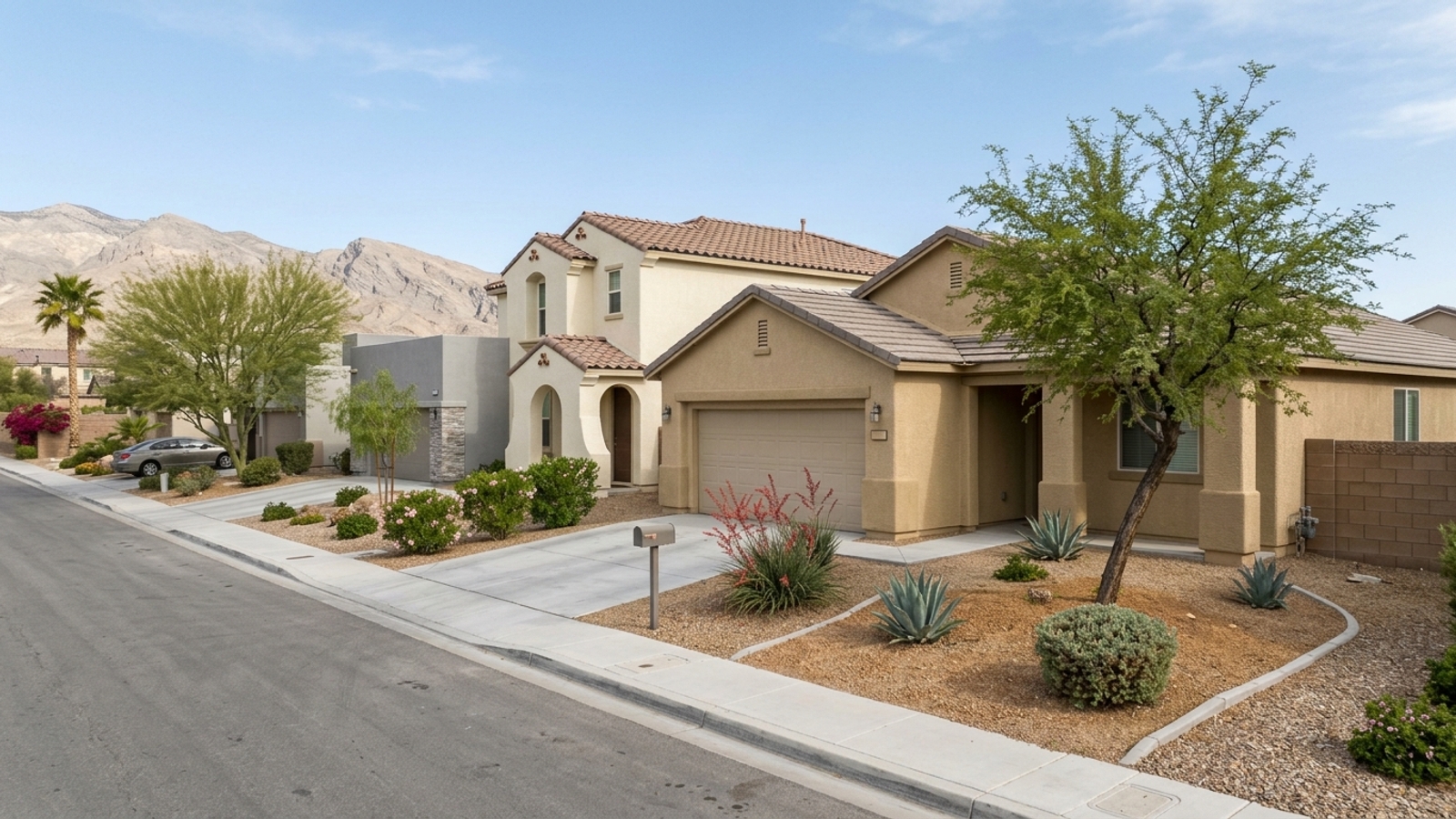
Inheriting a home with relatives often leads to disagreements over whether to keep it or cash out.
Key takeaway
Yes, one heir can force a sale in Nevada. While probate is open, the personal representative sells under court rules; once the house is in the heirs' names, any co-owner can ask a court for partition. With Las Vegas single-family homes selling in a median 51 days, an agreed listing or a buyout priced off an appraisal usually ends the dispute faster and cheaper than a lawsuit. Partition is the backstop when someone refuses to negotiate.
Who this guide is for
You co-inherited a Las Vegas, NV house with relatives who won't agree on selling, and you are deciding whether to negotiate, push the estate's personal representative, or go to court.
Can you force the sale of an inherited house in Nevada?
You cannot make a brother or sister sign a listing agreement. You can start a process that ends in a sale without their signature, and which one you use depends on whether the estate is still open. This guide is for informational purposes and is not legal advice; consult a Nevada probate attorney to review your specific situation.
Which legal route applies to your house
Start by looking up how the deed is vested through the Clark County Recorder. That tells you whether the house is still in the decedent's name or already in the heirs' names. You can also ask the probate court clerk or the estate's attorney whether letters were issued and whether the personal representative has full or limited authority.
If a deed upon death was recorded, ownership passes directly to the named beneficiaries without the property going through probate at all.
While the estate is still in probate
Heirs do not vote on the sale; the personal representative controls the transaction. Under full authority, the representative sends heirs a notice of proposed action, which includes a form allowing you to object. An objection sends the sale to court.
Under limited authority, a judge must approve the sale at a court confirmation hearing. At that hearing, a higher written offer can displace the accepted one if it beats the price by at least 5 percent (bids up to $100,000) or by at least $5,000 (bids of $100,000 or more).
If you aren't the personal representative, you cannot list the house yourself. Your tool against a stalling representative is a petition asking the court to compel action or remove them, and that takes time.
After the house is in the heirs' names
Once the estate distributes the house, or a deed upon death takes effect, the heirs or beneficiaries usually hold it as co-owners. Any one of them can ask the district court for partition without anyone else's permission.
Because a house can't be physically split, the court can order a sale when a physical division would cause great prejudice to the owners. Nevada adopted the Uniform Partition of Heirs Property Act. If the court finds the house qualifies as heirs property, it must first allow the other co-tenants to buy the interests of the person seeking the sale before it orders a sale.
The downside is practical. Until a judge rules, nobody can sell the whole house, and every co-owner keeps sharing taxes, insurance, and upkeep on a property no one controls.
Options for getting an inherited house sold
Selling an inherited property typically ends one of three ways: a buyout, an agreed listing, or a court-ordered sale. Negotiating keeps the timeline and costs under the family's control; relying on a judge adds legal fees and delays. Get a written estimate of selling costs before negotiating, so each heir can compare the options by what they would net.
Buy out the other heirs
This works for the heir who wants to keep the house. Price the buyout from an independent appraisal, not an online portal estimate. For a house worth about the Las Vegas single-family median of $499,701, split three ways, each one-third share is near $166,567 before any mortgage balance and costs. Ask the lender for the current payoff balance on any loan still tied to the property.
The negotiation centers on the gap between that figure and what each heir would net after selling costs. What you give up is time and cash. The buying heir needs funds or a loan that closes, and a delayed buyout gets more expensive. One heir rejecting the appraisal can stall the whole thing.
Agree to list the house and split the proceeds
Every person on title signs a listing agreement and, later, the deed, so one holdout blocks this route. Proceeds are split by ownership share at closing. Las Vegas single-family homes recently sold for a median 98.1% of list price, so an agreed listing is likely to come close to the asking price.
Disputes usually resurface over the list price and whether to fix the house first, so agree on both in writing before listing.
File a partition lawsuit
A co-owner files a complaint in the Eighth Judicial District Court and every co-owner is served. The court appoints a master to partition the property and sets the sale method. For heirs property, that is generally an open-market sale unless the court decides sealed bids or an auction would be more economically advantageous for the co-owners as a group. The filing alone often restarts talks, but that's a possibility, not a guarantee.
The downside is straightforward: you hand control of the price, the timing, and the buyer to a court process, and the legal costs come off the top before anyone is paid.
How the Las Vegas market affects a forced sale
Single-family values rose 3% year over year in Las Vegas, so waiting doesn't mean losing value on a house, but a buying heir's price is climbing. Townhouse prices fell 2.8%, so a stalemate there costs real value.
Condos have 7.3 months of supply and a median 78 days on market. A condo dispute earns nothing while dues and carrying costs run. If the property is a condo or townhouse, ask the HOA for current dues and any delinquency before deciding how long you can afford to wait.
How to choose your route
- Is the estate still open with a personal representative appointed, or is the house already in the heirs' names, including through a deed upon death? See Which legal route applies to your house.
- Do you want to keep the house or cash out? Keeping it points to a buyout; cashing out points to an agreed listing.
- Will every co-owner sign? If even one won't, see File a partition lawsuit.
- Is the property a condo or townhouse rather than a single-family home? Check the market figures before deciding how long you can afford a standoff.
If you want the fastest exit and every heir on title will sign, start with an agreed listing. If you want to keep the house yourself, start with a buyout. If you want a sale while probate is still open, work through the personal representative. If you want a sale when a co-owner on title refuses every offer, file a partition lawsuit. Las Vegas Realty & Probate can price a buyout or prepare an agreed listing to help resolve the standoff.
Las Vegas home sales at a glance
- Single-family, Las Vegas (90 days ending 2026-09-30, 1,697 sales): median sale price $499,701, up 3% year over year; median $268 per square foot
- Single-family (same window): median 51 days on market, 98.1% sale-to-list, 14.6% sold above list, 4.3 months of supply
- Condo (90 days ending 2026-09-30, 232 sales): median sale price $249,874, 0% year over year; median 78 days on market, 97.7% sale-to-list, 7.3 months of supply
- Townhouse (90 days ending 2026-09-30, 253 sales): median sale price $349,954, down 2.8% year over year; median 71 days on market, 98.3% sale-to-list, 5.6 months of supply
- All homes (90 days ending 2026-09-30, 2,186 sales): median sale price $449,786, up 1.1% year over year; median 55 days on market, 4.8 months of supply
Forcing the sale of inherited property in Nevada FAQs
How much does a partition lawsuit cost in Nevada?
The filing fee for a General Civil Complaint in the Eighth Judicial District Court in Clark County is $270.00. The co-owners pay the costs of partition and the master's fees in proportion to their interests. At the court's discretion, they also pay reasonable counsel fees spent for the common benefit. If only some parties litigate, the court may charge that litigation's expenses to them. Ask a Nevada attorney for a written estimate of total legal fees.
How long does a partition lawsuit take in Clark County?
A partition lawsuit can take many months to reach a judgment and sale, far slower than an open-market sale in Las Vegas. Ask your attorney for a local estimate based on current court schedules.
Can I sell my share of an inherited house without the other heirs?
Yes. Nevada law lets tenants in common sell, transfer, or gift their undivided interest without the other co-tenants' consent. Buyers of a partial share are typically investors, so get any offer and terms in writing.
Can a co-heir living in the inherited house be charged rent in Nevada?
It depends on the estate's circumstances and whether the occupant is the executor or another beneficiary. Ask the estate's attorney whether occupancy is being credited against that heir's share.
How long does an executor have to settle an estate in Nevada?
The personal representative must file an inventory and appraisement with the clerk within 120 days after letters are issued, unless the court extends that time or all interested persons waive it in writing. They must also file a verified account and report within 6 months of appointment, then account annually until the property is distributed.
Can you handle a Nevada probate or partition case without a lawyer?
It is possible to represent yourself, but the Eighth Judicial District Court has specific rules for self-represented personal representatives and civil filings. The Civil Law Self-Help Center explains its services and the restrictions on acting for an estate with other beneficiaries.
Can I claim a loss on the sale of inherited property?
Yes, if the inherited property was held as an investment or rental rather than a personal residence. The loss is computed by comparing the sale proceeds to the property's basis. That basis is generally its fair market value at the date of death, or on the alternate valuation date if the executor elects it.
What is the 2 year rule for inherited property?
The United States has no special two-year rule for inherited homes; the two years usually refer to the IRS ownership and use test for the home sale exclusion. To exclude capital gains, a taxpayer generally must own and use the home as their main residence for at least 2 years out of the 5-year period ending on the date of sale.
Sources
- Redfin: Data Center
- Nevada Legislature: NRS Chapter 39
- Nevada Legislature: NRS Chapter 148
- Nevada Legislature: NRS Chapter 143
- Nevada Legislature: NRS Chapter 111
- Clark County Courts: Filing Fees
- Nevada Legislature: NRS Chapter 141
- Nevada Legislature: NRS Chapter 144
- IRS: Publication 551
- IRS: Publication 523